Subscribe via your favourite podcast platform: Spotify | Apple Podcasts | Google Podcasts | Anchor | Breaker | Pocket Casts | RadioPublic
In this week’s episode:
- Automation and AI can remove admin pain from practices: From speech-to-text clinical notes to automated claims, the tools already exist to give vets time back.
- Insurance shouldn’t feel like the ‘big bad wolf‘: Better communication, real-time data sharing and modern channels (text, WhatsApp, digital claims) can transform trust and experience.
- The Swedish model shows what’s possible: Real-time claims, instant payment, and connected systems prove that seamless insurance workflows aren’t futuristic – they’re achievable now.
- Pet insurance is harder than human healthcare – but it doesn’t have to be: Lack of standardisation across breeds, treatments and pricing makes claims complex, but technology can bring order to the chaos.
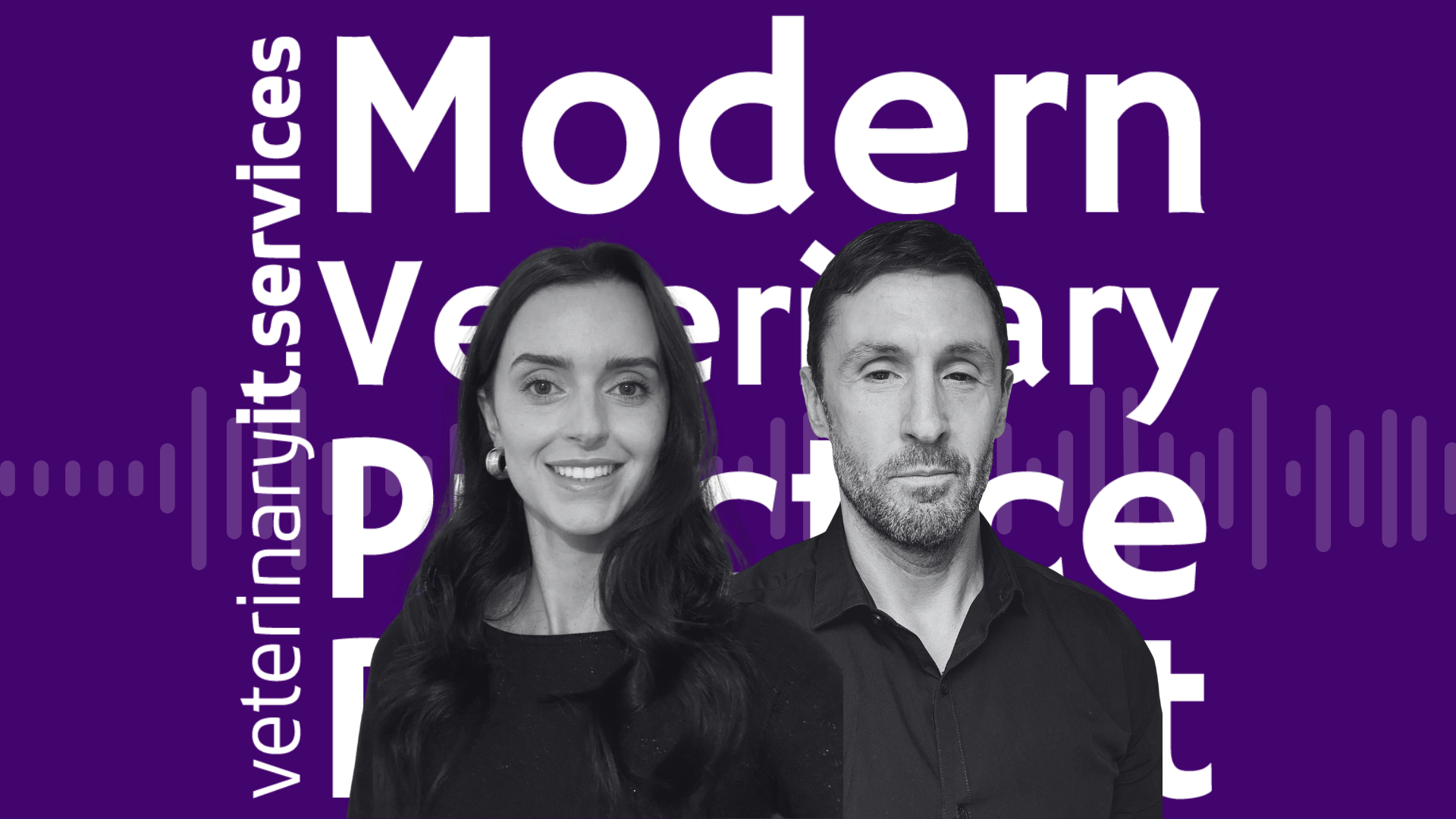
In this episode, Jack Peploe speaks with Garry Nelson of Wisentic Pets UK about how AI, automation and connected systems can radically simplify insurance, reduce admin, and improve life for veterinary teams and pet owners alike.
Additional Guest Spotlights
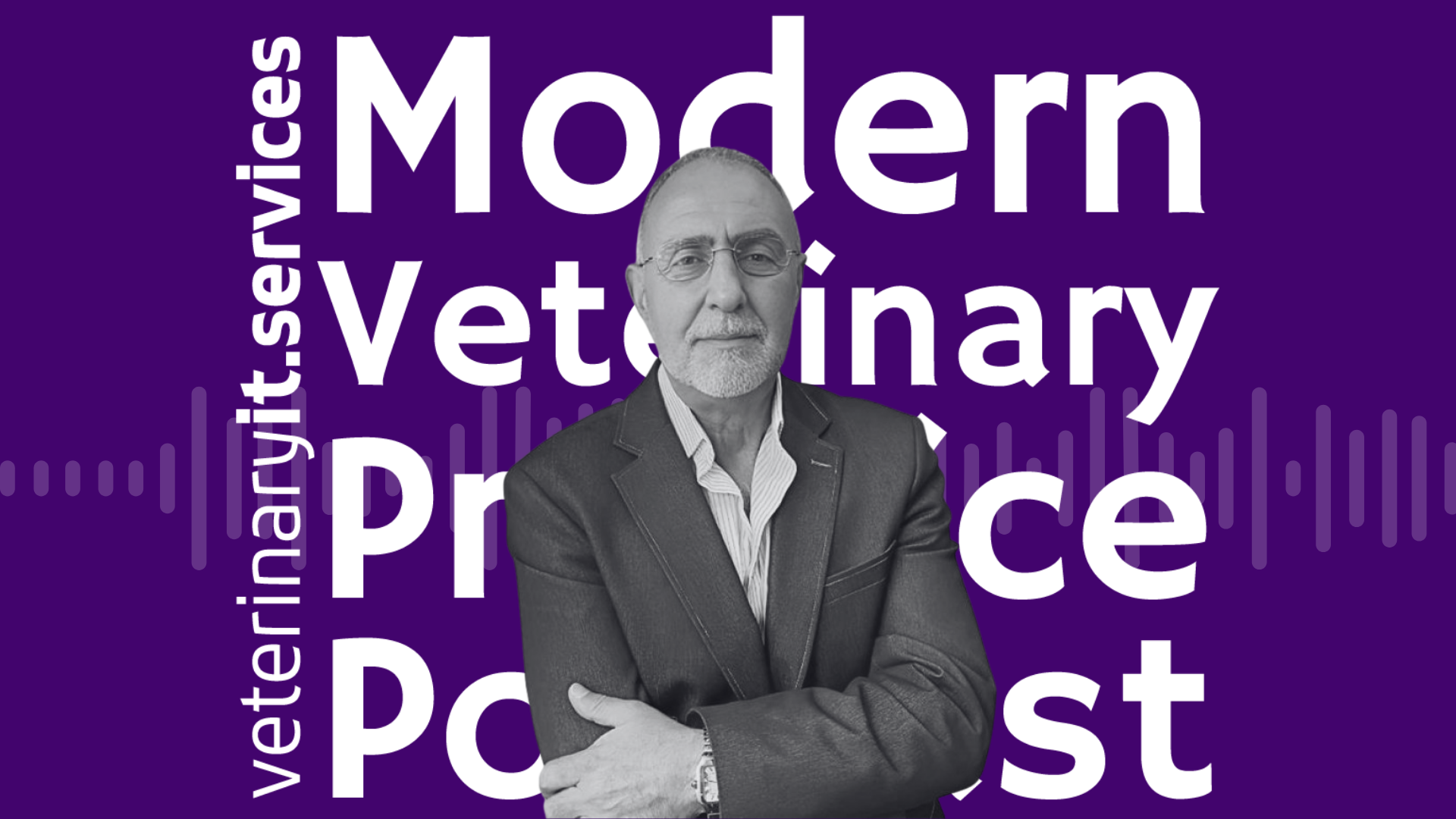
- Next Episode Sneak Peak: Coming up next week, David MacDonald, Vetsource, explores effective change management and why aligning teams around the rationale, impact, and measures of success is critical to turning good ideas into sustainable progress without unintended disruption.
- Recommended Resource: Our recommended resource this week comes from Dr Phil Richmond, highlighting The Culture Code and The Four Agreements as powerful reads for leaders, offering practical insights into psychological safety, empathy, and the importance of not taking things personally or making assumptions when leading teams.
Show Notes
- Out every other week on your favourite podcast platform.
- Presented by Jack Peploe: Veterinary IT Expert, Certified Ethical Hacker, CEO of Veterinary IT Services and dog Dad to the adorable Puffin.
- Find out more about Wisentic here!
Transcription
Jack Peploe:
Coming up on Modern Veterinary Practice.
Garry Nelson:
Sometimes the insurer is seen as the big black wolf, and I think that’s unfair as well. So with modern technology now, there is no reason why using text, WhatsApps, and every other media that is available done well, done properly. I think it was Isaac Asimov said that IT works beautifully. I think when it’s simple, it looks like magic. Well, that’s what we need to do, is have some magic involved.
Jack Peploe:
Welcome to the Modern Veterinary Practice Podcast. I’m your host and veterinary IT expert, Jack Peploe. In this episode, I’ll be welcoming Garry Nelson, managing director of Wisentic Pets UK to the podcast. We’ll be talking about how insurance automation and AI can radically simplify life inside veterinary practices, why claims and admin are still far more complex than they need to be, and how a smarter, more connected systems can improve experience for vets, teams, and pet owners alike.
Garry Nelson:
Yeah. My name is Garry Nelson. I’m the managing director of Wisentic Pets UK. A little bit about my background. I actually originally from Liverpool. I suppose you’d call me an old rocker. I collect guitars. I used to play in a band many, many years ago. I won’t tell you the name of the band because everybody would Google it and then I’d be a little bit embarrassed. I have got eight guitars and my wife has said that if I buy another one, then there will be a divorce on the table. I’m not too sure which is going to be the cheapest option really. But I do love guitars. I’ve sort of fell into the insurance business after working for my father for about seven years and worked my way up to quite some senior roles in Prudential. I was a main board director. I was sales director of Bupa and then moved into my own company, which I had for about 13 years in design.
And then just sort of found myself in the software business. Often look back into wonder why the hell that happened, but it did. But the software business in particular, dealing with insurance companies and helping them with their efficiencies on insurance claims. So a very, very much a game keeper turned poacher. So having a keen and a good understanding of the insurance industry and how it makes money and how it needs to be efficient, there I was on the other side of the coin, coming with solutions and ideas and software that would help that happen.
And hence, I’m now in, I suppose, the pet ecosystem as they call it. So there’s a brief introduction to me, Jack.
Jack Peploe:
No, that’s fantastic. Well, Garry, it’s great to have you on the Modern Veterinary Practice podcast. Now I’ve got to say what I find fascinating about your journey is that you are not just talking about innovation in abstract terms. You’ve actually lived at the intersection of tech, veterinary, admin and insurance for a while now, as you say, now you’ve seen how clunky systems can really wear down a team, but you’ve also clearly someone who brings a very human, even joyful approach to solving these problems. So I want to get into some of these bigger ideas today, not just about insurance tech, but about how we make work feel better and where automation fits into that. So you’ve said your mission is to simplify the lives of veterinary professionals. When you look at the day-to-day and practice, where do you think we’re overcomplicating things at the moment?
Garry Nelson:
Well, it’s a great question, Jack. I think perhaps not over complicating, but particularly the pet insurance industry and the claims process is a much more complicated one than the human claims process having worked for Bupa. I understand that. And many years ago, and I won’t say which year, but many years ago there was something called the Big Red Book. And the Big Red book was exactly what it suggests. It was like the telephone book with very thin pieces of paper in it. And in that book was every episode that a human being could actually have presented to it, bypass to it, on you name it. And within that book, and within that episode was a price, and there was a price for every little bit the drugs used, the bandages used the theatre time, the an, I can’t ever say that, but anesthetic, the surgeon’s prices.
And in fact, I do recall when I first joined Bupa, there was a row between an atheists and the surgeons on who should be paid more for a tonsillectomy because, and anesthetic side is more prevalent than the surgery side. Anyway, that makes life very much easier when it comes to insurance because there’s a lower limit and there’s a higher limit. And the insurer would say, well, we’re not paying above that. And if you want above that, the insured pays for the excess. In the pet industry, it’s really complicated much more because you’ve got all different animals, all different breeds and different methodologies, and there’s no standardisation in the uk. It’s a little bit like the wild West to be honest with you. And that makes the whole landscape really, really complicated. And where I believe the company that I work with and my reason to be is to try and standardise the way of working, standardise the information, make sense of that information using AI and all of the other tools that we can bring to bear to make life simpler and to make sure that an episode of a particular pet in Truro as opposed to Penrith, if the same episode or the same treatment has been made, then really it should be the same sort of pricing.
Does that sort of make sense, Jack?
Jack Peploe:
No, a hundred percent. A hundred percent. And I mean insurance is often seen as this necessary evil in practice life. Do you think that perception can ever shift and should it
Garry Nelson:
Well, I think most people think insurance is a bit dry as a subject, but trust me, it’s going through some really big changes at the moment. One of the changes I’ve seen this year is there is a price war going on, there’s a race to the bottom. And I think that is, from a consumer point of view, you might think that that’s a good thing, but quite frankly, I’m not quite sure because when profits are being squeezed, it puts transformation a little bit on hold and we don’t really want to see that transformation or the IT transformation being delayed. I guess making insurance claims smoother, a more friendly to the consumer is really important. I dunno about you, Jack, but when I have to phone any large large institution for any reason at all, whether it be my gas provider, my electric provider, my car insurer, or my pet insurer, my heart sinks because you know that it’s 45 minutes waiting for the music to stop and us being told we’re on hold and your call is valuable to us.
Well, it bloody well isn’t is it if you’re having to sit there for 45 minutes. So again, another thing that I truly believe is how do we bring technology into that equation to make the parents’ life easier and the insurer their lives easier? And also to make sure that the insurer is seen as providing a really great service to the policy holder because sometimes the insurer is seen as the big black wolf, and I think that’s unfair as well. So with modern technology now, there is no reason why using text WhatsApps and every other media that is available done, well, done properly. I think it was Isaac MOV said that it works beautifully. I think when it’s simple, it looks like magic. Well, that’s what we need to do is have some magic involved.
Jack Peploe:
Absolutely. And on that, because obviously you’ve worked on claims for years, why do you think paper still dominates so many clinics? Is it culture fear or tech barrier or something else?
Garry Nelson:
Well, I think sometimes people don’t like change, even though it’s painful. But there’s a number of wonderful PMSs around at the moment. I won’t mention any brands because I don’t want to sort of be two partisan, but there’s a number of PMSs that are using AI
To even turn voice into text. It’s been around for many years. A company that I used to work for used to speech analytics to identify next best actions actually in real time when a customer was talking on the phone. This has been around for quite some time, but in terms of the vet actually doing some treatment and talking about that treatment, if you ask Yvette what takes most of their lives up, they’ll say is doing the bloody notes at the end of some treatment, having to upload all of that and type them into the ps. If that could be done automatically using speech analytics actually uses AI to significantly upgrade the intel that’s going into that PMs and then automatically make a claim on behalf of the customer. Wow. Again, it’s that magic again, it’s that technical magic that helps. I also think I’m going to get into real trouble on my next comment now. I think it could be an age thing as well, a demographic age thing. I’m of an age where my kids think I’m a little bit decrepit and typical middle aged, angry old man type thing. I’d like to think that when it comes to technology, I’m still wide-eyed and bushy tailed and in awe of what technology can do. I do think that seems to be in some areas the province of younger people, and I think that’s wrong. I think everybody should embrace the technology. So those oldies out there that think that it’s all newfangled and it’s not worthy, take that hat off, give it a go, give it a whir, play around with it, and embrace the magic of what particularly AI in veterinary practice can do. Yeah,
Jack Peploe:
Absolutely. Now obviously Wisentic is Swedish. In Sweden, the pet insurance model is way more embedded. What could the UK learn or maybe even indeed unlearn from that?
Garry Nelson:
Wisentic is, it’s a fabulous company actually. I feel very privileged and honored to be heading up the UK side. It’s a dream come true for me in Sweden. You’re absolutely right. The adoption of insurance is over 90%. That’s grown up through a period of trust between the insurer, the pet parent, and the claims processing side. It doesn’t seem to be the abrasive issues between insurer and claimant and vet group in Sweden, as there is in the uk, the Swedish connections in terms of, what should we say, communications is smooth and it’s in real time. Data flows around and around and it’s shared, and that makes queries about a claim much quicker.
I remember being hauled on a call by an organisation that should remain nameless, but it was a large vet group who wanted to show me what in their eyes, what good looked like it was in a previous company. Those who want to look on my LinkedIn would know exactly who that is. So have a look, but my previous company, so I was basically asked to come along and see what they believed was what good looked like. And it was the Swedish model and it was a pet being brought group into a vet being worked upon and the claim being made in real time and the claim was paid before the pet left the practice.
Jack Peploe:
That’s awesome.
Garry Nelson:
That is awesome. I must admit, I sat there in awe and thought, wow, that is light years away from where we are in the uk. The company that was involved in that was Vient, and that’s why I’m so excited to, I think we’ve got a long way to go because it’s not just us bringing that technology to the UK and saying, there we go, use it. There’s an element of connecting all the pieces together, PMSs, tech groups, insurers, but that technology exists. It’s available now using ai. It can support extremely swift analysis of claims and identify even elements of fraudulent activity, but more so just make it smoother for everybody. Make sure the vets get paid quicker. The pet parents are looked after, and I think I’m going into a slight rant now, Jack, but one of the things that I think is really important is that at the point of care or just before the point of care, the vet and the pet parent are cognitive of the policy that is held by the parents details. So from the vet’s point of view, will they get paid?
Is the policy live? Has the direct debit stopped? Is there an excess? If there’s an excess, who’s going to pay it? How’s it going to be paid? All of these things, if that information is available, will stop. A lot of the issues that I’m sure have ended up on the CMAs investigation panel of complaints that have come in with pet parents saying, I didn’t know. Nobody told me was they did this work. It was 3000 pounds. I didn’t know that I had, et cetera, et cetera. So I think again, using technology to communicate seamlessly and smoothly and in a friendly way is absolutely paramount.
Jack Peploe:
No, absolutely. Now, you mentioned some really interesting ideas there, especially sort of this concept around the practise getting paid before the client even leaves the building, which is very exciting and that’s kind of the here and now to a point, not necessarily in the uk, but it is kind. The technology’s there. Now, if we were to zoom out, what the veterinary clinic of 20, when insurance, what do hope like work there?
Garry Nelson:
Oh, what a great question that is, Jack. I love that question. Going back to that IT and solutions being like magic, I think it’s about a connected ecosystem, a connected world where if you move house, I’m in the process of moving house, hopefully you’re going to exchange today, but God only knows, but moving house, so you move out the area and you take your pets with you. It’s hit and miss today, whether that history would actually, of your pets would actually be moved to your new vet, not a guarantee. Same with your own doctor. Actually, sometimes that doesn’t happen. But wouldn’t it be nice to know that if you moved from London down to the west country and you went to a new vet that you could with a pet passport on your mobile picture of your pets, the obligatory barcode or what have you, go into your vet, sorry, they take a scan and immediately all of the pet’s history with everything that’s involved in that is immediately moved to that new vet. Why should that not be the case that technology exists today? So there’s one thing, the ability to make an appointment by just using Siri or Alexa with a diagnostic bot
That actually will give the vet a little bit of forward information about what’s going on with Fluffy the dog or what have you. The ability to automatically order a prescription using Alexa or Siri rather than pay sometimes inflated prices from dispensaries and have it delivered within four hours. At the moment, you buy something on Amazon, same day, it turns up you buy something from Tesco and Swoosh, it’s 20 minutes. Why not with prescriptions? I think as well, the veterinary industry, again, going back to that age thing, has got to adopt this new way of working. I’m just trying to think of 2030. I’m struggling Jack sometimes to think about what I’m going to eat at lunchtime, nevermind his life. Does that give a sort of a flavour?
Jack Peploe:
I think it absolutely does. I think that there’s so many exciting things and I get very excited about predictive care, but I mean, that’s another conversation to be had for another day. I knew this would be the case. We would literally hit that 20 minute mark, which is typical. But Gary, thank you so much. It’s honestly so rare to find someone who can talk about the insurance technology, but also the human connection in the same breath. And may I add not to lose someone along the way? Now, if people wanted to get in touch with you, how can they go about and reach out to you?
Garry Nelson:
Pretty simple. Really go on to our website, and I better spell this because I was at the best UK Awards lunch. I was very privileged to be able to give an award out. It was wonderful. But I sat on a table with 10 people and I said, look, I’m s from, or Vient or I dunno. And everybody, I said, let’s have a bit of a challenge to see who can say it the right way. I have no idea how one says it. And even in Sweden, the folks in my own company say the brand in a different way as well. So it’s WISENTIC. So go onto linkedin and you’ll find me on there, send me a note or Gary with two rss Nelson, N-E-L-S-O-N. Go onto LinkedIn. You’ll find me on LinkedIn or Gary Nelson com. So send me an email. I’d love to hear from you. I’m a great believer in learning by people’s comments and thoughts, and when I put my posts out, I always ask for, let me know. And people do. It’s fascinating. So that’s how people can get ahold of me.
Jack Peploe:
Yeah, cool. No, that’s perfect. And they will all be in the show notes. But Gary, thank you so much. That’s been so much fun. You are very welcome.
Speaker 3:
Recommended resources.
Jack Peploe:
Every episode we ask professionals and experts to suggest a best business resource for our listeners. This speech recommendation is from Dr. Phil Richmond.
Dr Phil Richmond:
The book is called The Culture Code. I read that that book is essentially client services, psychological safety, all that. I read the whole thing. I’ve read it three or four times. And as a book in a leader, I think there’s so many great books out there. But for me that was a really great one from a spiritual aspect, just something that was a relatively easy read. The first book that I read that wasn’t directly recovery related was the four agreements and the second and third agreement, and I’ll get ’em mixed up, but one is don’t take anything personally, which is easy to say. But when you realise that it has so much more to do with the other person and the spiritual and emotional condition that other person is in, it allows me to give grace to that person. And not that I’m taking vitriol or aggression or anything, but if they’re just upset or something like that, I can say, oh wow, that’s where that person is.
And then don’t make assumptions as my father used to colourfully, tell me. And so I was telling you about that journey and recovery going through my whole life. And when I realised all of these things that I spent so much time going over in my head, and by the way, there’s an 88% overlap in what we imagine to be real and what we see with our senses. So my brain can’t tell the difference. If I imagine something, I’m going to have the same emotional response as if it’s actually happening. So I went through all those emotions or nothing because I assumed that, oh, they did this because of this. I filled in the blanks with that. And those two principles are really, really powerful.
Jack Peploe:
Coming up next week, we welcome David MacDonald, veterinary surgeon and UK market Lead at Vet Source. David shares his journey from clinical practice and partnership through senior leadership roles at LAN AEUs to now helping international veterinary technology scale in the uk. We explore why so many vets are struggling to enjoy the profession, their hidden inefficiencies, draining time at energy from practices and how better use of nonclinical data could transform wellbeing as well as performance. David also challenges how we think about efficiency leadership and change management, arguing that smarter systems should exist to support people not squeeze them.
David MacDonald:
I think it’s some change management, being able to manage change. It sounds really basic, that’s why I’m questioning myself, but I genuinely, I can think of so many examples where I didn’t practice that in practice, and I see it a lot now as well, that we’ve got great ideas and maybe these are ideas that we as a practice owner have been sitting on for years even. And then we implement it because it’s amazing and we have this massive fallout with our team leaving interiors, whatever, because they didn’t understand. They didn’t understand the why or why was it going to benefit, how we going to evaluate its success. And yeah, I can think of several examples of what I’ve done in the past that I just hadn’t managed that change. Therefore, I hadn’t managed team expectation. Everybody had a slightly different idea of what was going to happen or what it meant for them. And actually the impact that could have happened maybe wasn’t as great as it should have been.
Jack Peploe:
That’s it for this episode. All links and recommendations we talked about are in the show notes. Don’t forget to subscribe and share the podcast if you found it useful. In the meantime, thanks for listening and see you next time.