Subscribe via your favourite podcast platform: Spotify | Apple Podcasts | Google Podcasts | Anchor | Breaker | Pocket Casts | RadioPublic
In this week’s episode:
- Culture must be designed, not left to chance: Starting from scratch allowed Pet People Vets to intentionally build values, leadership style, and behaviours from day one – recruiting into culture rather than letting culture form by default.
- Human-first practices lead to better practice: Prioritising team wellbeing, psychological safety, and genuine connection doesn’t dilute clinical standards – it strengthens them, improving decision-making, client relationships, and patient outcomes.
- Innovation fuels engagement, not just efficiency: From laparoscopic surgery to in-house CT, meaningful innovation keeps clinicians stimulated, supports lifelong learning, and helps prevent burnout caused by stagnation or overly routine work.
- Good leadership is present, vulnerable, and values-led: Effective veterinary leaders remain clinically involved, communicate openly, admit mistakes, and consistently act in line with shared values – building trust across teams and clients alike.
Join us this week as we dive into what it really means to design a veterinary practice around people – exploring culture, wellbeing, values, and how human-first leadership creates stronger teams, better leadership, and better care for patients and clients.
Additional Guest Spotlights
- Next Episode Sneak Peak: Coming up next week, Gary Nelson of Wizentic Pets UK joins us to challenge the broken insurance claims system – and share how tech and AI could transform the experience for vets and pet owners.
- Recommended Resource: Our recommended resource this week comes from Rebecca Maher, who takes us offline with a powerful book pick on behavioural science: The Choice Factory by Richard Shotton.
Show Notes
- Out every other week on your favourite podcast platform.
- Presented by Jack Peploe: Veterinary IT Expert, Certified Ethical Hacker, CEO of Veterinary IT Services and dog Dad to the adorable Puffin.
Transcription
Jack Peploe:
Coming up on modern veterinary practice.
Ian Stroud:
We had the opportunity to start from scratch, and I think that gave us a huge advantage to set the culture from day one to try and recruit the right kind of people who shared our values and to try and do things a little bit differently or a little bit better in certain areas where perhaps there’d been neglect. We also opened at a difficult time for the profession. It was just coming out of COVID and the profession needed a bit of a hug, to be honest. Everyone was struggling physically, mentally, and there had been big changes within the profession. Significantly decoratization and the change in leadership style that brought about. And then lots of different things that happened. The rise of technology as well seemed to so coincide at that time as well. So it gave us the opportunity to think afresh about how we should approach these things.
Jack Peploe:
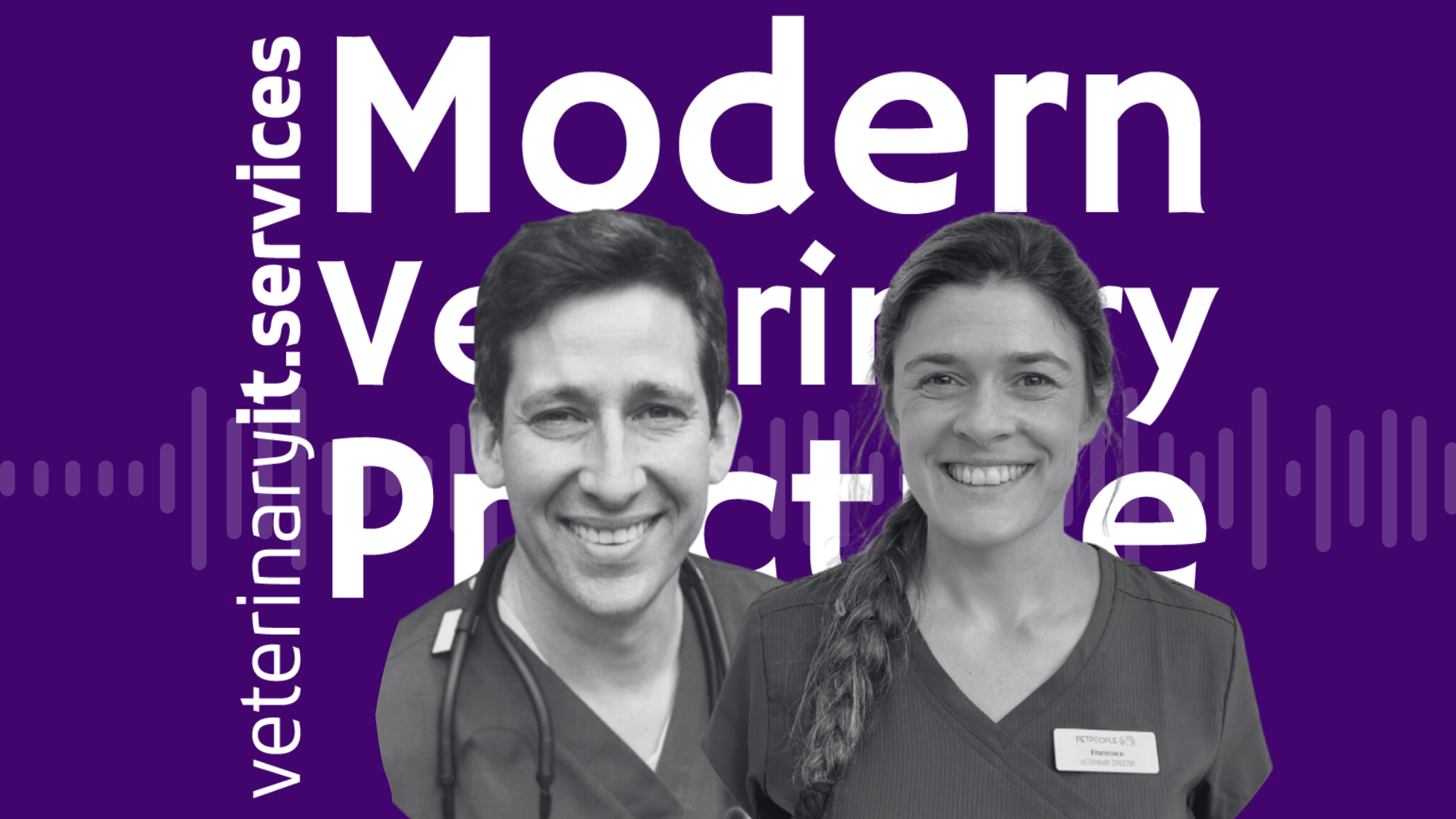
Welcome to the Modern Veterinary Practice Podcast. I’m your host and veterinary IT expert, Jack Peploe. In this episode, I’ll be welcoming Ian Stroud and Francesca Verney, co-founders of Pet People Vets to the podcast. We’ll be talking about what it really means to design veterinary practices for human first, exploring culture, leadership, team wellbeing, and how putting people at the heart of a practice ultimately leads to better care for pets, clients, and the profession as a whole.
Francesca Verney:
The interview. I’m Francesca. I’m a vet of many, many years now and currently one of the co-founders of Pet People Vets, which is an independent practice with two sites in Southwest London. Ian and I met many years ago and had a random conversation that resulted in where we are now, some years later. And we are both vets in practice every day, but love running the business and also run a group of independent practices which share information and run training in CPD. So those are our two focuses at the moment.
Ian Stroud:
I’m a bet of even many more years. And I still love my job as both the clinician and running the business. Like Francesca said, we met several years ago and set up Pet People. Before that, I ran a group practice in South West London called Vet for Life. And before that did work, worked with one of the corporates for many years. Yeah, I think it’s a fantastic profession, which gives me so much interest and so much excite and enjoyment and fulfilment. And I couldn’t imagine doing anything else.
Jack Peploe:
I couldn’t agree more. In Francesca, welcome to the Modern Veterinary Practice Podcast. It’s obviously brilliant to have you both on here. How are you today?
Francesca Verney:
Oh, good. Relishing the cool weather, aren’t you?
Jack Peploe:
Yeah, very, very good. I haven’t quite got air conditioning in this room, but hey, as soon as I step out, I’d be okay. Now, you’ve both built incredible careers in clinical medicine and leadership, but what stands out most about Pet People Vet is the clear intention behind it. Now, this isn’t just about clinical excellence, it’s about culture, kindness, enjoying the workplace, which I think is amazing. So today I’d love to dig into what it really means to build a practice where people thrive, how that impacts clients, patients, and the industry at large. So I suppose my first question for you is, the veterinary world often talks about clinical excellence and client care, but you’ve placed a big focus on team culture. Why was that, I suppose, your starting point, and what did you feel was missing in the traditional model?
Ian Stroud:
I’ll go first. I mean, there’s a lot to talk about, so hopefully we can cover some of it. We had the opportunity to start from scratch, and I think that gave us a huge advantage to set the culture from day one to try and recruit the right kind of people who shared our values, and to try and do things a little bit differently or a little bit better in certain areas where perhaps there’d been neglect. We also opened at a difficult time for the profession. It was just coming out of COVID and the profession needed a bit of a hug, to be honest. Everyone was struggling physically, mentally, and there had been big changes within profession, significantly the corporatization and the change in leadership style that brought about. And then lots of different things that happened, the rise of technology as well seemed to coincide at that time as well.
So it gave us the opportunity to think afresh about how we should approach these things. But Francesco and I, we’re quite passionate about the right people, getting the right people and trying to get them to be the very best that they can be.
Jack Peploe:
No, I think that’s awesome. Now, Francesca, you’ve led, I’m writing thinking multi-site veterinary teams. What’s been the most surprising or challenging difference between being a leader in, say, a corporate setting and being a founding partner of a new purpose-driven venture?
Francesca Verney:
That’s a great question. I also love the fact that I’m nodding in this audio podcast, my first one. I think the big difference was really when I worked in that setting and for many other people, you can have quite a, I suppose, more of a superficial view of what’s going on. You have an overarching view, but your level of detail can be quite limited. Whereas starting from the beginning, I’ve been really challenged and hopefully it’s been challenged as well, but I certainly have been challenged with the level of detail that we have to go into. It’s a bit like I look at it as when you pull a core of rock and you have to know every level of that. And when you’re good at that or not, it doesn’t really matter. You still got to do it. So I’m not great with detail, but we have to make sure we have doorknobs on day one, but we had to make sure the culture was great and we had to think about the practicalities of the systems for you.
So it was being available to do everything at a high level from the start and then very quickly recognising that we needed to delegate that out to people that were better, which is, I think, the kind of founders, the founders paradox that you have to do everything yourself, but you’re the worst person to do some of those jobs early on. So that’s been the change for me.
Jack Peploe:
No, that’s cool. And Ian, you were one of the first to pioneer keyhole surgery in London. What does innovation mean to you today and how does it link back to team wellbeing and better patient care?
Ian Stroud:
Well, yes, I started doing laparoscopic surgery because I thought there was a better way and I would like to challenge myself as well. And it was just fortunate that there is a better way that is less painful with fewer complications and a faster recovery. So that’s an absolute win for the client. It’s also a win. For me, it’s doing something fairly unique and interesting and pushing my skills and knowledge. And this lifelong learning is really important. And I can only speak for myself, but I think lots of my colleagues share those same values, wanting to do the best for their patients and to continue to develop their skills and learn for the long term. And by having stuff like the Keyhole Surgery, it allows the colleagues who join us to develop those skills and learn and push themselves. And we’ve recently installed a CT scanner at work.
And again, that’s another step up in our learning and our skills. And it attracts by having that source of equipment helps to attract the right people, I think, who also want to take things on.
Jack Peploe:
No, absolutely. Now, most practice teams are a mix of different personalities and skillsets. I think that’s the same for any business, to be fair. What have you learned about what makes a team truly cohesive and how do you foster that intentionally? I mean, Francesca, do you want to start with that?
Francesca Verney:
Yes. I think that’s something we live out every day. I think from our experience, and hopefully it’s not speaking too much here, but we are very different people in ourselves. So the kind of partners of this business have very different, hopefully complimentary, but very different skillsets. And I think we intentionally or unintentionally reached for that already started working together. And within our team, I think similar things exist, but the ability to have a relatively large team quite quickly and the ability to work out everybody’s skillset is really valuable. But I think there’s also some core principles that we found as we’ve grown along, that there’s a sort of momentum and a culture and the practice holds that we now recruit into rather than the other way around. So certain values that we think really characterise what we do and that actually inform our processes now for recruitment and reviews and development of our individuals.
So it’s kind of flipped on its head. And we now have a practice where we can recruit into the culture rather than seeing what the culture’s like with the people that we have. And that feels quite powerful, I think.
Jack Peploe:
And how long, because I think that’s one thing that’s really interesting is sort of values and ethos. Is that sort of massively understated within the veterinary industry, do you believe?
Francesca Verney:
I think it’s probably underarticulated. I’m a firm believer that lots of vets actually probably almost exclusively within the industry, people have high levels of integrity and value led decision making and work that they do, but we’re not as a percussion very good about talking about that, which I think is where some of the scrutiny comes forward with the finances. If we were better able to articulate how we work, what we do, what our principles are and what really drives us, I think it’d be a little bit more understanding for the profession. So I think it’s just something we need to learn to talk about better in a less apologetic way.
Ian Stroud:
I think the values, it’s great when they align. Everyone’s got similar shared values and we spent a lot of time working on our values recently because we’d opened, we’ve grown, and then we just really needed to really cement what it was about it that we were. So we did go back to the drawing board and involved a lot of the team in that decision making process about what our values, our stated values were. But sometimes everyone’s got different values as well, but hopefully we can say, these are the values of the business, this is what we should … Hopefully they are synthetic and interact well with your own personal values. And this is what we’re trying to work towards. For example, one of our values is quality, and we want people who work with us to work to a high quality. It’s important to me.
It’s important to Francesca, and it’s important to our customers and our patients. So the Bash should be a fairly easy one to integrate with the people who’ve gone through the recruitment process, but you still end up sometimes with a lot of tension in the industry because sometimes there may be an animal that needs a certain treatment and there are costs constraints to that. It’s a very common and obvious one there, but we try and be open about it. We try and talk about it. We don’t try and come down high-handed and say, “This is what we must do. ” We just try and take each case as individual. We talk to our staff. We hopefully have an open door where everyone can talk to us about these things and just try and do the best for the team and everyone else.
Jack Peploe:
No, I think that’s amazing. And going on the personalised care aspect, the idea is often sort of thrown around, but what does it actually look like day-to-day in your practice and how do you build genuine connection without burning out?
Francesca Verney:
I think a lot of work on that has been done for us within the recruitment process, so getting the right people. One of our other values that we spend a long time thinking about and debating is love. And we think that that’s important within our team and between our team members, and we spend a lot of time together. So it’s worth having genuine, meaningful friendships at work that means something to everybody. And as a result of that, I think the right recruitment, and then we spend a lot of time working within the consult room. So we do consult reviews where I will watch footage of the consults, which sounds controversial, but actually isn’t at all. The verse now request these meetings and they will suggest to me a consult that they think didn’t feel right, didn’t go right. There wasn’t that rapport with the owner.
And for us, the consult room becomes the engine of the practice and that kind of forum for communication. And if we can get that bit right, that’s where we can get those individualised conversations going really well. And we can have a collaborative approach with the owner with happy beds going towards care for their pet together and that alignment, that rapport, that bond is really what can then drive everything else. The whole success of the business is collateral to that in our minds. So I think getting that right, and as you say, that relies on our teams being individually and cohesively happy, the clients perceive that and they’re able to communicate the ideas really well in the consult room. And that’s the key.
Jack Peploe:
No, I mean, for all the listeners that are listening to this, that is exactly how you should use CCTV. That is fantastic and really refreshing. Now, there’s a growing awareness that family workplaces can contribute to burnout. What do you believe a healthy veterinary environment must have? And it might be what you just suggested, but more importantly, what needs to be left behind?
Ian Stroud:
One of the things that we embraced early on was a four-day working week, which gives people sufficient time away from the practice from us. It’s- We
Francesca Verney:
Do an eight-day
Ian Stroud:
Working week.
So there’s some structural things that you can press in place. There’s recognising and talking about things. So when people are acting differently to their normal personal behaviour, then it’s trying to … I mean, Francesca’s extraordinary at this sort of thing, but pulling them to one side and going for a walk and a coffee and asking if everything’s all right and being open to having that discussion, being listening and being able to make changes when people talk about sensible changes by … We have a morning huddle in the morning where we can plan the day because I think so much of the stress that we put ourselves under is often through our planning or … So we try and ensure that we’re managing the day from eight o’clock rather than waiting till 3:30 before we decide how we can make the day better. So there’s lots of things that we can try and do to do it, but I certainly know what burnout’s like.
I think I’ve had it in the past and so for me, it was just not really caring and that was shocking because you think you’d know what it was like and you would be there and you would be like, “Oh, I’m so stressed and burnt out and I know about it. ” But actually probably the opposite is true. You probably think you’re coping, give me more. I can handle more. I’m not sat in three days. It’s great.
But then you start not to … In my case, I started not to care about the outcome of my patients, which was extremely unusual. And so recognising it, I think, was useful. But if we can have that time with people, we can help them and speak and support them in that way.
Jack Peploe:
No, that’s fantastic. Gone, Frank, were you going to say something?
Francesca Verney:
Yeah, I was just going to … I think all of that is really important and certainly something we’ve started to initiate from the beginning. The other thing that maybe is a little bit controversial with a small C is that I think some of the burnout, and I don’t want to diminish this, but some of the burnout that Vet’s experience is actually because it’s become a bit less exciting. And so the type of work that we’re doing, the many businesses and surgeries now are actually you’re doing more routine type work. You’re not maybe getting all the things in your day that you were trained to do. And sometimes I think with robust things in place, so we have a very sensible overtime policy, if you spend time over your hours, you get that straight back. We have the four day week, we have lots of things for the practical side of people’s wellbeing, but we do offer high expectations, high support for people.
And I think going home late, knowing that you’re going to get the overtime back, knowing that you’ve done a fantastic job on a new surgery with great support is actually really exciting. And we need to be very careful that we don’t assume that all burnout is relating to overwork. Some burnout is relating to kind of boredom and not managing to exist in that flow space where you’re between border and stress. So I think that was the other idea when we set up this business was to be able to nurture more recent graduates to do exciting, great work, but to know that they were going to have a work-life balance that could allow them to love that.
Jack Peploe:
No, I love that. And what do you believe defines good veterinary leadership today and how do you keep growing as leaders yourselves while also still being clinicians?
Francesca Verney:
Such a good question, isn’t it? I think for me, I think it’s important for me that the team knows that I work with integrity and drive. So there’s kind of key factors that I would like to always exhibit. I think a great degree of vulnerability, so being able to hold your hand up for mistakes and for feedback and genuinely want feedback and be receptive to it, which I find really hard, and I think most people do. But I think drive vulnerability and occasionally attention to detail with people. I’m much more of a people person than a systems person. I’m sure you know through my IT lack of knowledge, but I’m not into things or processes, but I am into people. And I think paying attention to the detail of people’s trajectories and lives can be very important alongside those other features. So value-led leadership, I think, playing out every day.
Ian Stroud:
Yeah. I think you have to look at your values, your stage of values, and there’s nothing more that breaks that trust than if you can’t do that. I think you’ve got to be consistent and fair to people. I think you’ve got to try and be positive at all times, even when you’re not positive. And yeah, I think being present in the practice is important. I think it’s extraordinarily difficult to lead and motivate a team if you’re absent. And I think we’ve seen that with the large corporates, even with layers of laser management, it’s been very challenging for corporates to inspire. And yeah, we have moved from doing everything on day one, but now we’re definitely trying to have your head and your clouds and your fees on the ground by continuing to do some clinical work, meet the clients, open the cupboards, make sure that the Cosmos there when you needed to be there, but also having enough time protected to think about the bigger picture stuff that’s going to make a difference to people’s lives.
Francesca Verney:
And there’s two of us, which on a practically. I think don’t undermine the whole relationship, but I think it’s been good to have two of us. I don’t know if Ian would agree, but it means that we have a degree of redundancy. If one of us isn’t there, often the other one is, we have skillsets that are different. We have people with whom some of the team probably speaks with one of us before the other or vice versa. And as long as we navigate that carefully, I think it does allow for a good start point for entrepreneurship because it’s hard and Ian’s done it on his own ones and he’s back again, but I think it can be made easier by doing it together as well as you pay attention to that relationship as well.
Ian Stroud:
No, and it’s quite true. The first time, my first venture by myself, it was my castle and I built walls around it and I was hugely protective of it and I think it went well, but on reflection, it was great to have sold a business and have some time away and to reflect on what you might do differently, what you would keep and what you would not do again. And definitely one of the things was to build bridges and be more collaborative with the community of vets and vet nurses and other people that support business. And so yeah, definitely it was … Francesca and I met, but I was absolutely primed to want to work with somebody. And also we’ve extended that out. So we’ve tried to reach out to all the independent practices in the local area and to be collaborative and helpful and supportive and work together wherever we can.
Jack Peploe:
No, I think that’s amazing. Now, I warned you this was going to happen. The 20 minutes has flown by and I still have so many more questions for you. So we’re going to have to get you guys back on. But thank you so much for joining me today. Obviously, your approach to veterinary care feels really refreshingly human and I know listeners will walk away with some real food for thought. Now, for those who want to follow your journey or learn more about Pet People Vet, where’s the best place to connect with you?
Francesca Verney:
So I’m on social media. So we are always here in person for anyone to visit.
Ian Stroud:
You got to let them.
Francesca Verney:
We both on LinkedIn to variable degrees, but we enjoy that and we’re happy to be contacted on there and the practice is on all the normal social media areas. And the live group, which is our and London Independent Vet Enterprise is also something that people can speak with us about. We looked at Evil as an acronym, but didn’t feel quite as good, so it’s live. And just message me on LinkedIn if there’s any interest in that, but we’re always here at the practice.
Jack Peploe:
Well, guys, thank you so much. It’s been such a pleasure.
Francesca Verney:
Okay,