Subscribe via your favourite podcast platform: Spotify | Apple Podcasts | Google Podcasts | Anchor | Breaker | Pocket Casts | RadioPublic
In this week’s episode:
- Trust is layered – and your PMS is part of it – Pet owners trust vets, but that trust depends on clinicians trusting their systems to deliver consistent, reliable care.
- Poor design creates hidden clinical friction – Every extra click, workaround, or missing workflow compounds into lost time, stress, and reduced efficiency across the team.
- Most practices underuse the tools they already have – A lack of onboarding and training means powerful PMS features often go unnoticed, while teams chase external “shiny” solutions.
- The future PMS should feel invisible – The goal isn’t more features – it’s intuitive, human-centred systems that stay out of the way and enable better patient care.
Dive into this episode to explore how trust in practice management systems shapes team efficiency, client confidence, and ultimately the quality of patient care.
Additional Guest Spotlights
- Next Episode Sneak Peak: Next episode, we’re joined by Alice Barker, vet surgeon turned tech innovator, as she cuts through the noise of “solutions” that don’t actually solve anything. If you’ve ever felt tech was imposed on your practice rather than built for it, this conversation will challenge how you think about buy-in, behaviour change, and what real innovation should look like.
Transcription
Jack Peploe:
Coming up on modern veterinary practice.
Ellie Waldron:
So when I used to go into practice, I didn’t know what a practice management system was. I didn’t care what our practice management system was. I just put my trust in the vets and the nurses that they were giving me all the information and the advice and the care that I needed. And then when I went into practice as a nurse, I was like, oh, okay. So this is what our practice management system does. It’s more than just taking notes. And I was learning more about why vets use a practice management system and how much we relied on it. And as a pet owner, I didn’t think about any of that. I just trusted the vets. And the vets then need to trust their practice management system so that the pet owners can trust them, if you know what I mean. It’s kind of like the trust passes on.
Jack Peploe:
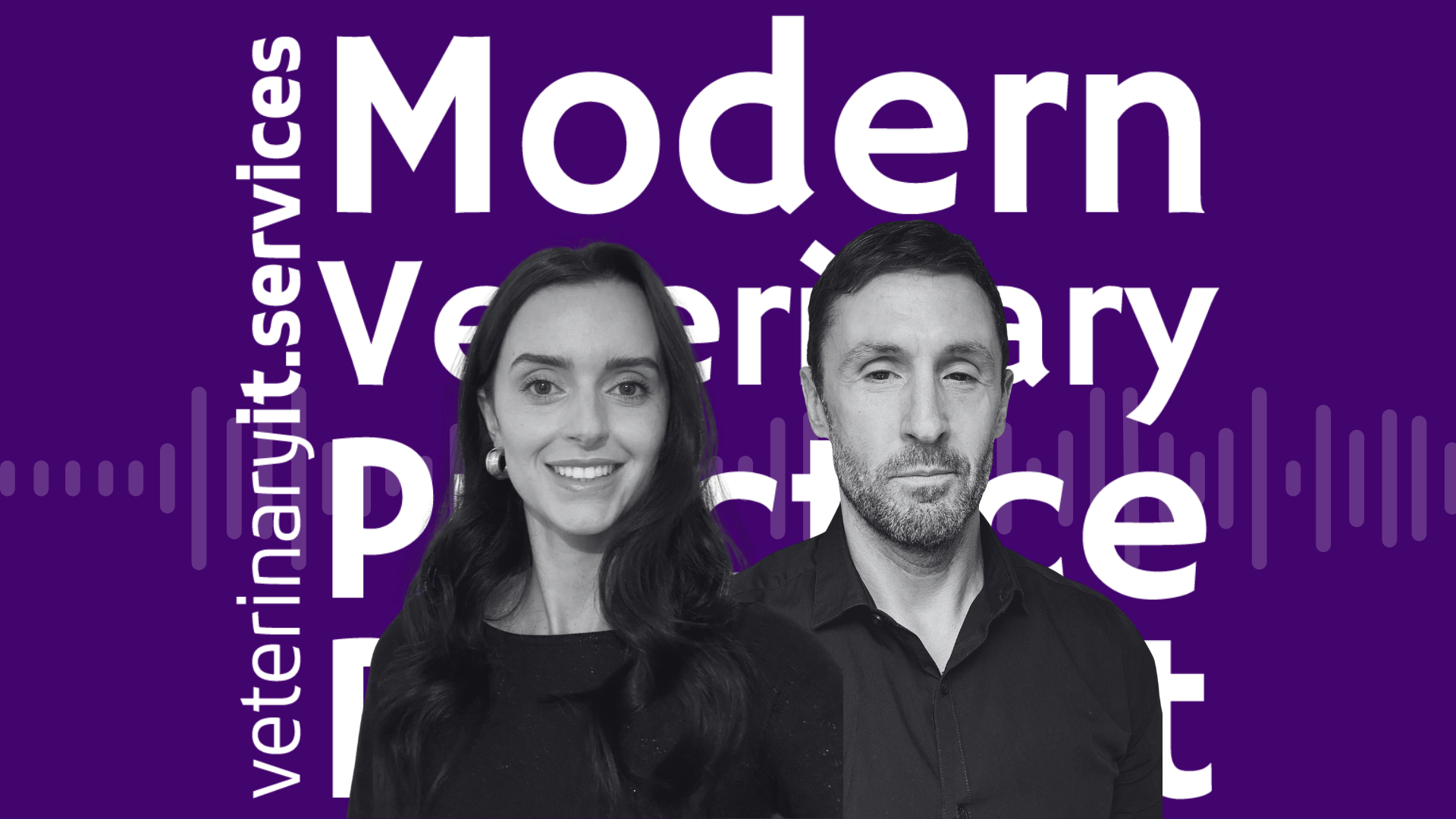
Welcome to the Modern Veterinary Practice Podcast. I’m your host and veterinary IT expert, Jack Peploe. In this episode, I’ll be welcoming Ellie Waldron and Ryan Norton from MWI, bringing together frontline veterinary experience and product leadership to the podcast. We’ll be talking about how trust in technology is built within veterinary practices, the realities of practice management systems, and how better design tools can reduce friction, save time, and ultimately allow teams to focus on what really matters. Patient care.
Ellie Waldron:
Hi, everyone. I’m a registered veterinary nurse and I am the customer product consultant manager at MWI. So my role is all around Merlin and onboarding and supporting all of our customers to our practice technology suite.
Ryan Norton:
And I’m Ryan Norton. I run the product management team here at Merlin. I’ve been here for about two years. So relatively new to the world of animal health, the background in human health and prior to that entertainment, but longtime product management geek, I guess. So yeah, all things related to product, people, design, needs, all that stuff.
Jack Peploe:
Well, guys, it’s super exciting to have you on the podcast. I’m really glad that you’re both here because you, as you’ve mentioned, represent two different but very complimentary angles on this conversation that I’d like to have. So Ryan, you mentioned that you come from that sort of tech world where real-time user feedback can drive constant product evolution. And Ellie, you bring the lived experience on the other side of the fence, the practice floor, which is so incredibly important in today’s standards. Now, one thing that stood out for me from both of your stories is the idea of rebuilding trust in systems. Whether we’re talking about tech workflows or even change itself, a lot of practices have been burned before. So I’d like to start by unpacking that a bit. In your opinion, what does trust in technology actually look like in a vet practice? Is it reliability, speed, familiarity, or even something more emotional?
Ryan Norton:
So I’ll go first there. I think it’s certainly the emotional aspect of it. Trust is inherently emotional. Brands talk about having trust elements with customers, with users, and that’s because people invest a certain amount of motion into it. It does also involve the reliability and the capability. If I have invested my time in you and the service that you provide, but you don’t deliver against it, then that’s gradually going to erode any trust that I have in you. Certainly here at MWI and with the products that we offer to our customers, stability is a really important aspect, both the stability of the tech, but also the stability of who am I talking to? How often can I speak to somebody? The communication channels are a huge part of what we do, I think.
Jack Peploe:
100%. And I suppose an expectation aspect comes in there too, because it’s not always down to the supplier as such. It’s being really clear on what it is that a client expects from a tool or a platform. And making sure that the supplier is clear and understands what those expectations are and is clear on whether it’s possible to deliver. Would that be fair?
Ryan Norton:
Absolutely.
Jack Peploe:
Nice and easy.
Ellie Waldron:
No, yeah, I would absolutely agree. I think as well from my point of view, because I am and have been a pet owner before I went into the industry of being a nurse. So when I used to go into practice, I didn’t think about … I didn’t know what a practice management system was. I didn’t care what a practice management system was. I just put my trust in the vets and the nurses that they were giving me all of the information and the advice and the care that I needed. And then when I went into practice as a nurse, I was like, “Oh, okay. So this is what our practice management system does. It’s more than just taking notes.” And I was learning more about why vets use a practice management system and how much we relied on it. And as a pet owner, I didn’t think about any of that.
I just trusted the vets and the vets then need to trust their practice management system so that the pet owners can trust them, if you know what I mean. It’s kind of like the trust passes on. And in practice, being honest, I used to just fight daily with my practice management system because I didn’t really know what I was doing. I didn’t know how it worked. And you’d be lucky if you get proper training once you get into practice because it’s just too busy for someone to spend time doing that. So I think as my role and what I do with Merlin now, I find it so important to really emphasise and show that vets really can put all of their trust into their practice management system to take so much burden off so they can feel comfortable and confident that their clients are getting all of the advice and the recommendations and pulling them back into practice when they need to come so they can get on with the clinical stuff and their tech can do keeping up all of that communication and keeping those clients feeling like they’re in a safe pair of hands.
Jack Peploe:
Yeah, no, absolutely. I want to kind of unpack that a little bit earlier if I can, because obviously you guys have done something which is kind of really reassuring in the sense you’ve bought someone who’s been on the clinical side and there’s obviously a reason for that and that’s to sort of build a stronger relationship with your clients to show that you really, truly do understand them. What do you think most PMS developers still don’t get about practice life and how is it that you’re going to try to tackle that?
Ellie Waldron:
I think, I mean, just in general from a developer’s point of view, they just think of just the workflow getting from A to B rather than what would actually be going on in a practice. I think, like you said, from our point of view, so for my team, we only have either vet nurses or practice managers within the team and we are consistently feeding back, one, what we would’ve liked to see in practice and how we would want things to be different and saying, “Yeah, that’s great, but no one’s got time to click there and click that and do this. They need to do that there and then.” So we’re consistently feeding that back to our developers. And I think for us personally, people are learning more and more about the veterinary industry in general and how we need to make a tool that is going to work specifically for veterinary professionals and not just a piece of tech that gets you from A to B.
Jack Peploe:
100%. Now, I’m going to pick on you one final time. Brian, I have got a question for you straight after. Only because this is a really, really good point. Are there any specific moments where feedback from say a nurse or a receptionist or even a vet shaped a product decision? And what did you learn from that?
Ellie Waldron:
I mean, I think there’s been loads over the years, to be honest. So I’ve been here six years and we’ve seen loads of developments and enhancements. I think a specific one that we use in Merlin that we see particularly for the reception … Well, no, for everyone, particularly, sorry, for the reception team is cutting down the amount of time that is wasted when a client leaves their consultation room, they go back to the reception desk to book a follow-up appointment and they’ve absorbed so much information that nobody actually knows what they need to come back for, what date. So we created something called a follow-up appointment feature, which basically allows the vet or the nurse to put all of their details into Merlin and say, “I want to see them back for this, that, and the other.” That feeds straight back through to the reception team.
That pops up, they can go and book it in because it pulls over the date you selected, the reason, how long you want to see them for, any meds that may need dispensing. And there has been no reason for the reception, sorry, to have to get up, go knock on the vet’s door and say, “So what’s the plan? What are we doing next?” And even though for every consult, it’s maybe saving two to three minutes, when you’re seeing 30, 40 consults a day, that’s a lot of time that’s been saved and we’re constantly hearing back from teams that use it just how much time it’s saving or hearing from practices that aren’t yet using it. They go, “Oh, we didn’t even know that existed.” And we demo it and they think, “Wow, why have we not been using this yet?” So there is definitely that that we did.
And I think also more recently is the whole online payments and the automated payments piece that is fully integrated within Maryland. You don’t have to go onto another platform or anything like that. It feels part of your core workflows. And I think that time saver as well is we’re hearing back that that is just massive in terms of the time for those receptionists of not keying things in, not having to reconcile back into Merlin because it’s just shooting back and forth because they are the receptionists are, I think everyone says they are the hub of the veterinary team because they keep everyone in check and they keep the practice together. So for them, being able to help them and support them is a big thing.
Jack Peploe:
No, 100%. I mean, I honestly don’t know how they do their job. They are amazing people. But anyway, Ryan, I’m going to come back to you. You’ve obviously come from sort of an entertainment and human health tech background. What shocked you the most when you entered into the veterinary space?
Ryan Norton:
I think the shock or the realisation for me was that veterinary professionals are so dedicated to their work and their patients that for me was a massive eye-opener because they actually don’t care about the tooling, so to speak. They are in this because they want to look after animals and they want to look after their patients. In the human health tech space, yes, doctors and consultants want to make their patients better and there are people who are in it for that, but it’s not as committed as I’ve seen in the animal health industry. And I think I often say to our team and what we do, obviously we build technology to enable practice to do things, but it’s actually our job to keep out of the way. And in an ideal world, you’d have a practice management system that’s invisible and so intuitive. You could just talk to it and who knows, we may get there, and it just does the things you need it to do.
But obviously they’re complex systems and we always have to think, how do we stay out of the way so that we can enable the vets and all the people in practice to do the thing that they’re there for?
Jack Peploe:
No, 100%. I couldn’t agree more. It’s something which I’ve recently talked about at the London Vet Show is technology should be like oxygen.
Jack Peploe:
So necessary, so important, but you shouldn’t have to think about it. Exactly. That’s kind of the real key. So kind of going onto that, the practice management system, it is a beast. It does so much, so much. And sometimes we don’t even really understand what the meaning of a practice management system is. Now, how do you prevent things like feature bloat, that temptation to add more and more functionality, but risk making the system so hard to use. I mean, I’ve seen it, I’ve seen practice management systems, and in some cases you look at them and you almost go cross-eyed. It’s too much information. How do you prevent that?
Ryan Norton:
Well, unfortunately, I don’t think there’s a straightforward answer. I think there’s a lot to consider. And a lot of where technology is now, you talk about feature bloat, the build, trap, stuck, just building things and doing stuff because you’re either trying to keep up with the market, trying to keep up with a competitor, some really important person somewhere has said, “We need this. ” But we sort of pride ourselves on our relationship with our customers and our clients, and that is a hugely important part of what we do. And since checking every single thing that we’re going to create in terms of, is this adding value or is it increasing complexity? And I’m also a big fan of, if we’re adding something, what are we taking away? Because if it’s improving or additional to something, then we should be removing something because otherwise it just grows and grows and grows and grows and gets crazy.
So that’s kind of how we think about it.
We have UX designers who very much come from that human centred perspective of how is an individual and human being going to use this. And we involve, like I said, we involve all of our practices. We have obviously an early adopter cohort. We have a whole group that we can go out and talk to regularly in terms of, is this solving the problem right now? And if it isn’t, then okay, we need to go back and rethink it. It’s not a case of we’re just going to crash on forever. Actually, we know what we’re doing, we know what you need because otherwise we’re going down the road of no return.
Jack Peploe:
100%. Now, going back to the comment on tech should make lives easier, but at the moment it often feels like teams say that it kind of adds more admin. Why do you think that’s still happening in 2025?
Ryan Norton:
I mean, I think largely, I still think there’s a keeping up with the Joneses type mechanic to things, oh, they do this and we don’t, so we should probably do that. I mean, the nature of technology is we’re always trying to look at where the next new thing is coming from, what’s the next shiny piece to address, what’s the next new trend? There should be a greater focus on how are we retaining the people who are using our products right now and what are actually their problems? I’ve got a backlog list as long as your arm in terms of things that we could actually, just incremental things we could just make better.
And I could probably spend the next three years just working just wholly on that. And that would mean that the people who are using our product right now are getting exactly what they need. The problems that you find, certainly with businesses that have been around for a while, is that you stack a thing on top of a thing, on top of a thing, on top of a thing, and then you end up with this huge system. And don’t get me wrong, human health has exactly the same problem, arguably worse because there’s bigger investment, bigger voices shouting, all of those things.
Jack Peploe:
Yeah, no, absolutely. So Ellie, this is a tough question, so I do apologise in advance, but if you could design a PMS from scratch based on everything that you’ve learned, what would be the one thing you’d not include that most systems do today?
Ellie Waldron:
Oh, that is a tough question.
What would I not include? I don’t know. What don’t you like? The answer to that. What don’t I like? I mean, I like everything in Merlin. I think it’s pretty good.
Jack Peploe:
And it doesn’t have to be Merlin. It could be any sort of, from your point, what you see commonly come from practice management systems, maybe it’s PMSs that you’ve used in the past. What would be that one thing that you think, “You know what? It’s so unnecessary.”
Ellie Waldron:
I mean, it’s not a feature specific, so this is probably not as good of an answer as you want, but it’s kind of like just the overcomplexity of getting around, having to do multiple clicks to get into the area that you need or having to think about how do I go and pull up a list of all of my debtors or how do I go and do a reminders bulk send to all of our clients? It should be so intuitive that because in the industry, people move about from practice to practice so much and we’re so heavily reliant on locums at the minute, that it shouldn’t be that you go into a practice and you use a new PMS because there’s that many out there in the industry that you look at it and think, “I haven’t got a clue where to even start.” It should be that you can go in and it’s so intuitive that you can just fly around it without fighting with it like I used to do when I was in practice and I used to move around.
So it’s not specifically a feature, but as in the user experience and the intuitiveness of getting where you need to go, I would say.
Jack Peploe:
It’s a fair comment. I mean, it’s so incredibly key and I think it’s something which is often lacked within a lot of different practice management systems and it’s only because of the feature bloat problem, right? Yeah. You’re trying to shove so many different things in. So I think it’s a very good answer. I’ll let you have that one. So what will the role of the PMS look like in say 10 years? Do you think it stays at the centre of the practice or do you think it becomes more of a connector between sort of more modular tools?
Ryan Norton:
I think that’s a really good question. I think we’re certainly seeing a definite change in what it becomes and what its role is right now. So we’re certainly looking at … We’ve just talked there of the PMS as this giant complex system and actually if you were to start again, what would that look like? What might it be? And actually, would you just extrapolate separate parts of that and almost to have them exist on their own? I mean, theoretically might practice come to you and say, “Well, actually, we only need this right now to run, and as we grow, we might need these other things,” which is quite an interesting way of thinking about it. I think when also we look at integrations, obviously we as a business have lots of different integration partners who service specific technologies or solutions that address a really definite use case.
And actually, does the practice management system become modules that you can then join with integrations? And I guess does it become a more customer approach based on what you and your practice need? Now, arguably that fragments a market and it becomes … I mean, the animal health market is … That was another thing that kind of shocked me when my first ever London vet show I went to. I was like, “Wow, there’s a lot of stuff going on in this space.” Surgical tools and nutrition and technology and all of those things, it’s fantastical in terms of how it works. So I think that it’s not an exact answer to your question, but certainly it’s definitely changing. And I think being able to flex with the needs of our customers and our users and what they want to do is critical.
So we apply kind of a behaviour change model to a lot of the things we do because we’re trying to ground what we’re doing in the behaviours of the users and what they need. There’s something called Combi, which is capability, opportunity, and motivation to change behaviour. It’s something we applied when we did our work with digital payments, and it provides a really good model for you to sort of create interventions, which might not be technology interventions. It might be, we don’t actually need to build something for this. We can do it via communication or documentation, that kind of thing. So I think that’s a long-winded answer.
Jack Peploe:
No, but good answer. Elliot, I want to ask one last question because I’m very wary of the time, but what skillsets do you think practice teams will need in the future as technology becomes more embedded in sort of everyday clinical life?
Ellie Waldron:
So not necessarily on skillsets, but what I was just going to say off the back of Ryan is practices being aware of the power of their practice management system and what it’s capable of. So something that we really try to focus on with practices, and because in practice, I went through a PMS change and because it was like number 10 down on my priority list, I just thought, get this training over and done with. I’ve got other stuff to get on with. So it’s really giving practices the power of what they can get their PMS to do. And I think that’s something that practices need to spend time on. So for new starters, using resources that we’ve got in terms of our video tools and our video guidance to stay part of your onboarding as a new practice member is actually learning how to use the practice management system.
And because again, we know that kind of staff turnover can be quite quick in the veterinary industry, a lot of knowledge, people learn things and they can be a master of stock control in the practice management system. And if they leave, that knowledge goes with them. So it’s making sure that they’re constantly ensuring that they’re getting the best out of their PMS, not getting attracted by something shiny and new outside of it and thinking, hold on, can our PMS even, can it do this before I go and sign up to something shiny and new? So from our kind of perspective in my team, it’s about spending time and meeting with practices to say, “Are you getting the best out of Merlin?” But are you also like, what are your business goals? Do you want to see more people join up to healthcare plans? Do you want to get more people reacting and coming in on the back of their vaccinations and using the PMS and using Merlin in that way rather than just, “Do you know what you’re doing?
Can you get through a standard day?” So my long-winded answer would be about putting the time and the effort into knowing the power of the practice management system and what it can do for you.
Jack Peploe:
Absolutely. Great long-winded answer. Well, look, guys, thank you so much for both for sharing your experiences so openly. It really is refreshing to hear conversations about PMSs that really focus on people, not just features. And I hope those listening, especially practice owners and teams feel a little bit more empowered to ask the hard questions about the tools that they use every day, just like you said earlier. So if people want to get in touch with you in relation to Merlin or just ask you questions, how can they get in touch with you guys?
Ryan Norton:
We can give out … I’m quite happy for people to email us direct. There’s a whole bunch of communication methods via our website, the MWI website, phone numbers, et cetera. So I’m quite happy for us to pass our emails on after this as well.
Jack Peploe:
Amazing. And that will all be contained on the show notes. But guys, thank you so much. It’s been a really fun episode.
Ryan Norton:
Thanks, Jack. Nice to meet you.
Ellie Waldron:
Having us.
Ryan Norton:
Thanks a lot.
Jack Peploe:
Every episode we ask professionals and experts to suggest a best business resource for our listeners. This week’s recommendation is from Debbie Robinson.
Debbie Robinson:
Yeah, it’s seven and a half lessons about your brain. I think I may have paraphrased that for many, many years, and unfortunately I still see it. There has been this perception of how our brains work, and it’s based on a very, very old established triad brain, but there’s three parts of it. It was around the 1960s when neuroscience was sort of coming into its own, and it was sort of subscribed that there’s three parts of the brain, and you’ve got this thing about the dinosaur brain and the … And this debunks it completely. It actually is modern. It’s written by a lady who is a neuroscientist, and it is an absolutely fascinating book if you want to understand the way that we think and the behaviours that come from what we think and the neurochemicals that actually drive our thinking in the first place. It’s a fascinating book.
Jack Peploe:
Coming up next episode, we welcome Alice Barker, veterinary surgeon turned tech innovator, at Modeus, shares her journey from the chaos of clinical practice into the world of veterinary technology with a sharp focus on cutting through the noise of solutions that don’t actually solve anything. We explore what makes technology truly valuable in practice, why buy-in and behaviour change matter more than features, and how small, thoughtful changes can outperform large scale digital overhauls. Alice also dives into overlooked challenges like controlled drug compliance and salary transparency in the profession, shining a light on the areas that are quietly crying out for change.
Alice Barker:
And I have definitely lived through the chaos and also having been in practice where we’ve had different tech implemented in practice, sort of almost like it’s been a mandated thing. We just get told, “This is the solution that you have to use now, or this is the app that we’re using for X now, and this is what you have to do. Here’s your logins, make sure you set it up.” I think the biggest trial here and where it comes to creating and adding innovation and tech into a practice where there’s a lot of buy-in and it adds to creating efficiencies and simplicity in the practice rather than increasing complexity and noise is where you’ve got a solution that everybody is on board with and helps in that decision-making process. Because when you’ve got buy-in from the rest of the practice and everyone is on board with why we’re using something, yes, we all agree that it’s going to prove processes for everybody or select members of the practice that has a knock-on effect elsewhere, then everybody uses that, learns how to use it well, and it increases efficiency, simplicity in the practice.
Jack Peploe:
That’s it for this episode. All links and recommendations we talked about are in the show notes. Don’t forget to subscribe and share the podcast if you found it useful. In the meantime, thanks for listening and see you next time.