Subscribe via your favourite podcast platform: Spotify | Apple Podcasts | Google Podcasts | Anchor | Breaker | Pocket Casts | RadioPublic
In this week’s episode:
- Burnout isn’t a personal failure – it’s a system failure. Focusing only on individual resilience ignores the real issue: how workplaces are designed.
- Pressure helps… until it doesn’t. Performance improves with some pressure, but beyond a tipping point it becomes destructive – and that point is different for everyone.
- Leadership behaviour sets the real rules. What leaders do (not what they say) defines whether overwork is rewarded or healthy boundaries are respected.
- Small changes can have outsized impact. Something as simple as enforcing short breaks can improve performance, recovery, and team culture.
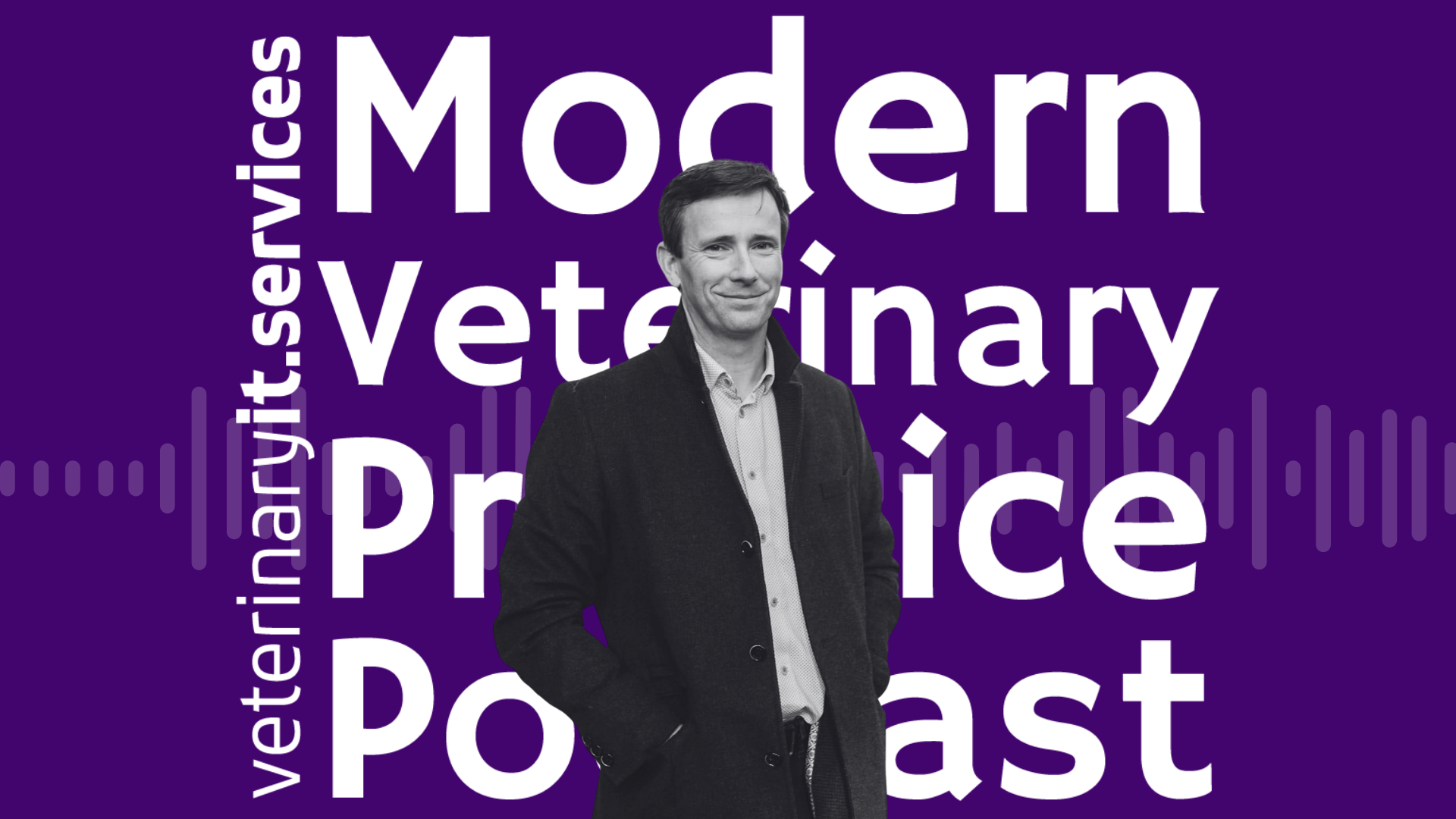
In this episode, Jack Peploe sits down with Jason Spendelow to unpack burnout in veterinary teams – and challenge the idea that resilience alone is enough to sustain performance.
Additional Guest Spotlights
- Next Episode Sneak Peak: Next episode, Jack is joined by Dr. Eve Hanks – veterinary surgeon, entrepreneur, and founder of miRNA – who shares her journey from clinical practice into cutting-edge biotech, and how microRNA could transform disease detection in animals. From the science behind early diagnostics to the realities of building a startup, this episode explores what it really takes to turn breakthrough ideas into meaningful change in veterinary medicine.
Show Notes
- Out every other week on your favourite podcast platform.
- Presented by Jack Peploe: Veterinary IT Expert, Certified Ethical Hacker, CEO of Veterinary IT Services and dog Dad to the adorable Puffin.
Transcription
Jack Peploe:
Coming up on modern veterinary practice.
Jason Spendelow:
The research says that a bit of performance pressure is often a good thing. It can help people focus, but you get to a point where the pressure, the workload, et cetera, becomes so high that it starts to become counterproductive. So where everyone sits is going to differ from person to person, but everyone has a point at which the pressure, the expectation to perform becomes a negative rather than being a positive. And so in terms of leadership’s role in this, they really have to think about what’s a sustainable workload for people, not just over the next week or two, but over months and years and kind of beyond, right?
Jack Peploe:
Welcome to the Modern Veterinary Practice Podcast. I’m your host and veterinary IT expert, Jack Peploe. In this episode, I’ll be welcoming Jason Spendelow, a clinical psychologist and consultant specialising in workplace wellbeing within the veterinary profession. We’ll be talking about burnout, physical health in veterinary teams, how leadership and systems shape workplace and wellbeing, and what it really takes to build a veterinary practice where people can perform at their best without sacrificing their mental health.
Jason Spendelow:
So I’m Jason. I trained as a clinical psychologist now 20 years ago. And I worked in clinical practice for a number of years, and then I started going into private or consultancy work and gradually kind of gravitated towards doing more work in workplaces actually. So started off doing individual coaching with senior managers and leaders in some big organisations. Then got really interested in the organisation as a whole and how it contributes to staff wellbeing, kind of staff performance, and have just been in various academic posts along the way while kind of practicing . And that really kind of got me to nearly five years ago now, taking up a role at Harp and Kill Vet School, which really got me into the veterinary world/industry. Hence us having this conversation today, really.
Jack Peploe:
And what a world it is. Well, Jason, look, it’s really great to have you here. You really have got sort of a unique perspective sort of straddling both those worlds of academia, consultancy, and clinical psychology. Now, what I really appreciate with your work is how grounded it is. You’re not just talking about the big ideas, you’re focused on how we actually use psychological science to solve real world problems in vet teams. So today, if it’s possible, I’d love to get into some of the messier bits, burnout, performance pressure, how leadership and systems impact wellbeing, and what it really takes to build psychologically healthy practices that don’t just sound good on paper, because that can be quite easy, but actually feel really good to work in. Now, the team wellbeing gets used so much. It’s almost kind of lost its meaning. How would you define in a way that’s actually useful for veterinary practices?
Jason Spendelow:
Yeah. So I think it’s really important to distinguish when we’re talking about wellbeing and when we’re talking about mental health or mental ill health. Often when we’re talking about mental health, people actually, I find are talking about mental ill health. So mental health problems, psychological distress of various forms. And wellbeing is almost kind of the flip side of that. It’s about how well you are in terms of your psychological or mental health. So the absence of difficulties and the kind of presence of the kind of good stuff that makes life worse living, basically. So for me, conceptually, that’s how I see wellbeing, particularly in contrast to mental health or mental ill health.
Jack Peploe:
I mean, you’ve written about burnout in veterinary space. What do you think are the most common misconceptions about what burnout really is and what causes it?
Jason Spendelow:
I think one of the big misconceptions or one of the big problems is a tendency to focus on the individual when it comes to burnout, because it manifests in the individual. It’s perhaps not surprising. Then people talk about what’s the individual doing or not doing to cause burnout. When really burnout is a phenomenon that needs to be thought of at the individual and the organization/work environment level, because there’s multiple factors that contribute to burnout. So not having that wide ranging perspective on burnout is quite problematic and something I see quite a bit.
Jack Peploe:
No. And I mean, obviously veterinary professionals are often told to build resilience, but how much of that going on from that point is a problem that’s personal versus systemic?
Jason Spendelow:
Yeah. Yeah. There’s a number of factors. I mean, you may approach a heavy workload in a not so helpful way, for instance, or may have certain kind of individual personality traits or kind of characteristics that lead you vulnerable to burnout and other mental health. Not that burnout’s a mental health problem, but other psychological forms of psychological distress, if you like. So that’s really important to take into account. But also if you think more widely about the workplace environment, if you’re working in particularly toxic team amongst people who don’t treat each other well, incivility is a very popular kind of term at the moment that gets talked about a lot, but I think it’s kind of relevant through to how an organisation itself, a vet practice is actually run. You can have some pretty atrocious practices around how you can structure or run a team, run an organisation whether it’s a vet practice or any other organisation.
So those are some of the examples of the types of factors that can play into a process whereby someone ends up really suffering and experiencing burnout amongst other problems.
Jack Peploe:
And I mean, you developed a model for sort of psychologically healthy organisations. Can you walk us through what that looks like and why it matters more than ever? Yeah,
Jason Spendelow:
Absolutely. So we have a model for a psychologically healthy organisation, which is basically a defined as a workplace that deliberately or methodically uses psychological science to create a workplace, a work environment that’s kind of optimised to allow people to perform at their best and remain healthy. So it’s much more of kind of an occupational health environmental perspective on wellbeing in the workplace rather than a mental health perspective, which I think for many reasons is really problematic. I’ll just take a bit of water there. Sorry, I was trying to get through to the end of the sentence, maybe just my own end. And if we break that down a bit further, so our model for a psychologically healthy veterinary practice or organisation has four key elements. We’ve got organisational support and autonomy. So that’s how much an organisation actually enables staff through support systems, good leadership practice and so on.
We’ve got a second element, which is team collegiality and safety. So that’s like the quality of relationships, basic safety, conditions at work, respect, and then communication, trust, et cetera. We’ve got, let’s see if I can get you all four. The third one is sustainable work demands. So this is whether the workload deadlines, your hours are realistically manageable over a period of time. And we’ve got a fourth element of the model, which is called engaged performance and balance. So this is where people are productive, they’re kind of committed to their job, that they really get meaning from it, and they get some of the good stuff from work over and beyond just kind of turning up and receiving your salary. Yeah. So those are the four elements. Hopefully that gives you a bit of a flavour of what actually a practice, a psychologically healthy organisation is.
And you can see there’s a real emphasis on the actual physical environment where often when people talk about workplace wellbeing, they talk about workplace mental health or mental ill health and there’s that just really, there’s an overfocus on the individual and the individual level.
Jack Peploe:
Yeah, no, absolutely. Now, many practice teams feel like they’re sort of always enclosed under the pump. What does the research say about how pressure affects performance? And I suppose more importantly, what can leaders do to create high performance without exhaustion?
Jason Spendelow:
So the research says that a bit of performance pressure is often a good thing. It can help people focus, but you get to a point where the pressure, the workload, et cetera, becomes so high that it starts to become counterproductive, right? So where everyone sits is going to differ from person to person, but everyone has a point at which the pressure, the expectation to perform becomes a negative rather than being a positive. And so in terms of leadership’s role in this, they really have to think about what’s a sustainable workload for people, not just over the next week or two, but over months and years and kind of beyond, right? Because that gets you very much focused on over a long period of time, is this a level of work, workload expectation that is on the healthy rather than the unhealthy side. And in the very profession, like a lot of professions have such a big problem with attrition and people leaving the industry, particularly fairly early in their career, that it’s something you’ve really got to look at.
And the other thing leadership really needs to think about is what are appropriate win-win measures of performance or good performance, right? So often there’s a lot of researchers out there who say, “We need to focus on productivity, not overly simplistic metrics like how many billable hours, just how many hours you work even, right?” Because often what matters is not how many hours you work in a role, it’s what you kind of produce and how kind of productive you can be. So those are two really important areas that leadership can focus on and trying to foster an environment where workload is sustainable, it’s manageable, and it kind of encourages people, motivates people to want to work and do well.
Jack Peploe:
Yeah. No, I was going to say, how do we move away from that culture that sort of quietly rewards the overwork and emotional suppression, especially in obviously the clinical roles?
Jason Spendelow:
It does have to start from management and leadership and the way you set up an organisation in terms of policies, procedures, et cetera, because the leadership modelling, good, healthy behaviours can then give that unwritten kind of permission, well, explicit and implicit permission for then other people within the organisation say, “Oh, it’s five o’clock or it’s six o’clock or two AM, whenever your knockoff time is, I can go home and I’m not too worried about massive negative kickback.” So I think leadership has to kind of model that. And often that’s forgotten, right? I’ll let everyone go on time, but I’ll stay and work, take one for the team, but actually that often is not helpful at all because people will potentially get next messages. So I’m told I can go home on time, but all the leaders, the decision makers, they are staying kind of late.
So maybe I do need to stay late after all and try and impress and kind of get ahead. So it’s really, really crucial part of the process that the messaging and the behaviour sync.
Jack Peploe:
Yeah. I mean, from a design perspective, I’m going to start small and then we can think big. What’s the one small change you’ve seen make a surprisingly big impact in improving team psychological health?
Jason Spendelow:
Enforcing short breaks through the day. Yeah. And I’ve seen this work quite well with a lot of individual clients of mine, whether when I’m more coaching non-clinical work with people in the workplace, it does a number of things. It actually helps you to recover cognitively and physically from an intense period of work, right? So that the rest that your brain gets allows you to kind of reengage productively in your work. It also psychologically shows people that often nothing disastrous happens if I take a couple of breaks. I don’t come back into the clinic or into the office and my colleagues are screaming at me, “You’re a slack healing the team down, you’re going nowhere, Spendelow, you’re going to be out on your ear in no time.” And it also serves a team environment to interpersonal function where the more people take these breaks, the more it’s going to encourage that kind of behaviour and people have people feel like, “I can do something little and healthy for myself like that as well.” So there’s a really simple kind of strategy that many people don’t do often because they’re afraid if I do it, there’s going to be big negative kickback.
But if you can do it, experiment it, but persist with it for a couple of weeks, you often see a number of benefits for those sorts of reasons.
Jack Peploe:
Yeah, no, absolutely. Now, obviously all of this incurs some form of change. And I mean, veterinary practices have experienced a lot of change in the last few years. I mean, from a technological side, you’ve got PMS migrations, you’ve got sort of AI side of things, kind of non-technical side, you obviously got corporate ownership. What does change fatigue look like psychologically and how do you help teams cope with this constant evolution?
Jason Spendelow:
Yeah. Change fatigue. I guess it can look like different things in different organisations, people disengaging from their work, having clearly unhealthful attitudes towards colleagues work, the organisation itself. There’s all sorts of, I guess, indicators of not only change fatigue, but an unhealthy psychological environment. But I think in terms of managing change and all the challenges around that, I think a really good place to start is to accurately and competently measure where you are at right now before we even undertake a change process. Sometimes people don’t do too much at once, right? But if you can accurately measure where you’re at, then you can strategically think about, well, what’s not only the appropriate change, but the appropriate amount of change given where we’re at given the circumstances. Obviously there’s some kind of constraints around that, but if plugging our psychologically healthy organization’s model, we’ve got really well validated instruments/questionnaires now that can actually measure the current psychological health of your organisation and each of those four areas or components that I mentioned that comprise the model.
And then you can step back and say, “Okay, here’s where we’re at in terms of those components.” Now, what do we want to do about that and what sequence and how fast or how slow? So if you take a concept like a psychologically healthy organisation, if you can adequately, competently measure where you’re at, then that puts you in a much better position to strategically and carefully and sensibly decide how a change process should unfold, should be rolled out. So I think that’s really, really important that you take those steps, otherwise you are at risk of undertaking a process of change that’s perhaps too much too rapid or not sequenced right, and then you get some of these negative outcomes.
Jack Peploe:
No, absolutely. Now, talking about the next generation, you mentioned you also work with vet students, and I think you also highlighted that we’re not necessarily preparing them adequately for the psychological realities of the profession, or is there still a gap between what’s taught and what’s, I suppose, lived?
Jason Spendelow:
I think there are increasing efforts to think about where are the gaps preparation wise for students. And I know at my school, Hub and Kill Fed School, there’s been really innovative work thinking about competency development and the non-clinical kind of skills and getting away from calling them A, soft skills, which absolutely hate, but to also thinking about what’s the best way to teach those skills in the context of all the clinical skills that people need, right? So I think there’s really good work going on, but also you do need to give people a realistic sense of, here’s what it’s going to be like post-qualification life when you’re actually out there in clinical practice, but do it in a way that you can simultaneously say, “And here are the strategies and skills that you need to be able to kind of cope with it as best you can.
” So you don’t want to say, “It’s really rough out there. Watch out. ” You want to say, “Hey, this is incredibly demanding and we have a big workforce shortage and all sorts of other issues, but here’s how you can best prepare yourself to go into that environment and then here’s really good practice in terms of self-care or non-clinical professional behaviours that are going to give you the best chance of performing well and keeping yourself healthy in that really difficult workplace environment.”
Jack Peploe:
And I mean, what’s one lesson you try to instill in that students about managing their own mental health that you wish you could give to every sort of practice team member too?
Jason Spendelow:
I think it’s a concept … What comes to mind is a concept called normalisation. Often people experience psychological distress and they say, “Well, there’s something wrong with me here.” I shouldn’t be experiencing this or this is an indication, some sort of personal stroke coming, right? And there’s a psychological concept I often utilise called normalisation where we normalise distress, we normalise any kind of unpleasant psychological state because we’re actually hardwired to experience these states. It’d be like giving yourself a hard time for being happy. That’s nonsensical. So well, yeah, I’m happy because I’m happy because people experience happiness, but just as normally people experience stress and depression and anxiety and jealousy and whatnot. So we’ve got to do more of normalising these processes because if we do that, then we can more easily step back and observe these unpleasant experiences and say, “Okay, what’s the best response to this?
” Instead of getting tired up with beating yourself up because you’re experiencing something that’s going to normal and unavoidable. So yeah, I’d say normalisation is a really great self-care strategy in your personal and your professional life.
Jack Peploe:
Jason, that’s fantastic. Well, this has been such a grounding and genuinely refreshing conversation. I think what makes your voice so important in this space is your ability to connect deep psychological insight with the live reality of the profession. Now, for listeners who want to explore your framework or connect with your work, what’s the best way for them to find you?
Jason Spendelow:
It’s very easy to store me online now as it turns out, but the best way to can touch with me is my practice email. That’s jason@thepracticalpsych.com. But if you just Google Jason Spindalo, that website’s going to come up straight away and it’s going to be pretty easy to grab my contact details and reach out.
Jack Peploe:
Amazing. Jason, thank you so much.
Jason Spendelow:
Welcome. Thanks, Jack.
Jack Peploe:
Every episode we ask professionals and experts to suggest a best business resource for our listeners. This week’s recommendation is from Alice Barker.
Alice Barker:
So my recommended resource, maybe slightly unorthodox is Adele William-Xavier’s LinkedIn page. Her content that she puts out on LinkedIn is so useful for me to talk about AI in the veterinary industry specifically. She really just cuts through the noise of what is just coined AI slop or AI hype that it’s not interesting or it’s not relevant to you. She provides data studies that’s been put out, actually really thinks and analyses about what’s being put out, not just copy and pasting articles that might or might not be relevant, but if anyone’s interested in AI and not sure about where to start with it or how to look at it or how to critically analyse what you’re seeing about AI, her content on LinkedIn is really, really easeful for that.
Jack Peploe:
Coming up next week, we welcome Dr. Eve Hanks, veterinary surgeon, entrepreneur and founder of my RNA. Eve shares her remarkable journey from clinical practice into the world of biotech and molecular diagnostics, exploring how microRNA could change the way we detect and understand disease in animals. We discussed the science behind these tiny biological signals, why earlier detection could transform veterinary medicine and the challenges of bringing cutting edge diagnostics from the lab into everyday practice. Eve also opens up about the realities of building a science-led startup and the courage it takes to step beyond the clinic.
Eve Hanks:
I think the world is more complex than science. It’s slightly more unpredictable, but I think that the science wouldn’t be anything without the world demanding the right questions or the right answers from the science. So I’m super passionate about the idea of not science for science sake, but science for change, science for advancement. And I think one of the best things around precision diagnostics, possible personalised medicine moving into that prediction as we talked about combining modern biomarkers with AI. One of the best things is that we can make a difference to health span.
Jack Peploe:
That’s it for this episode. All links and recommendations we talked about are in the show notes. Don’t forget to subscribe and share the podcast if you found it useful. In the meantime, thanks for listening and see you next time.